The PyIU Python Workshop Series Closes Out Its Fourth and Biggest Year Yet
As this spring semester comes to a close, the graduate student-led PyIU initiative completes its fourth year of programming—and what an eventful year it was!

As this spring semester comes to a close, the graduate student-led PyIU initiative completes its fourth year of programming—and what an eventful year it was!

Graduate student Zohreh Safariforushani, along with collaborators Caty Pilachowski, Gloria Koenigsberger (UNAM), Derek Sikorski (IU B.S. Astronomy and Astrophysics 2023), and Maria Jose Cordero (IU Ph.D. 2014) recently published her study of the double-line, eclipsing binary star V505 Persei. The system consists of two nearly identical F5 main sequence stars with masses of 1.2745 and 1.2577 solar masses and temperatures near 6500 K.

Congratulations to Professor Enrico Vesperini who was selected by the College Trustees Teaching Award committee to receive a 2026 Trustees Teaching Award!

We’re excited to report that Emeritus Professor Richard Durisen’s first published novel, a work of science fiction, is available on Amazon! The book is entitled “From the Shadows of the Landscape,” and the teaser reads “By the 37th Century, the Human Domain stretches hundreds of light years into the Milky Way Galaxy. Most occupants live long, rich, and untroubled lives—until something beckons from far beyond its edge.”

Graduate student Agustin Heron along with faculty member Cristobal Petrovich and collaborators recently published their work on substructures in planet forming disks based on high-resolution images from the Atacama Large Millimeter/submillimeter Array (ALMA). These images reveal that planet-forming disks are rich in substructures — rings, gaps, spirals, clumps, and bright crescent-shaped asymmetries. Many of these features are thought to signal young planets embedded in the disk.

Anika Goel, a third-year graduate student in the IU Astronomy Department, joined the leadership board of the NASA Active Galactic Nuclei (AGN) Science Interest Group (SIG) in August 2025. The AGN SIG brings together researchers across the community to discuss advances, challenges, and future directions in active galactic nuclei science.

IU Astronomy graduate students hosted the first Astronomy on Tap event of the year at The Orbit Room on February 11, 2026. With a Valentine’s Day theme, the event featured engaging talks by graduate students Tash Sandford and Katherine Barber that connected astronomy with the spirit of the holiday.

IU Students and faculty were well-represented at the January, 2026, meeting of the American Astronomical Society in Phoenix. Fifteen undergraduate and graduate students and three members of the faculty attended, along with many of our former students.

Recent Ph.D. graduate Laurin Gray and IU Professor Katherine Rhode have recently published a new paper in The Astrophysical Journal which continues their research on rotation evolution in young, low-mass stars. Their new study focuses on rotation velocities for Sun-like stars in the open clusters IC 5070 (~1 million years old) and IC 348 (~4 million years old). These stars are akin to newborns on stellar timescales. By studying stars in the early stages of their evolution, we can learn more about the processes that helped form our Solar System billions of years ago.

IU Undergrads Robbie Mailliad, James Wells, Clara Scheumann, and Dominic Bishop, recently met for dinner at Lennie’s with Adler Planetarium President and CEO Elizabeth Babcock. Dr. Babcock, an IU alumna, was visiting IU as a College Luminary to meet with students. The College of Arts and Sciences Luminaries Program gives College undergraduate students a unique opportunity to gain leadership and professional experience that will help them transition into life after earning their degree.

IU undergraduate student Bradley Hutchinson, along with faculty member Caty Pilachowski, is featured on an episode of the American Astronomical Society’s Journal Author Series about Bradley’s recent paper in the Astronomical Journal. The paper is available online at https://ui.adsabs.harvard.edu/abs/2025AJ....170..255H/abstract .

Congratulations to IU Astronomer Cristobal Petrovich, who has been elected as a member of the Governing Committee of the Division on Dynamical Astronomy (DDA) of the American Astronomical Society. The DDA supports the advancement of dynamical astronomy, including celestial mechanics, solar system dynamics, stellar dynamics, the dynamics of the interstellar medium, and galactic dynamics, and coordinates dynamical research with other branches of science.

The cosmic microwave background, originating some half a million years after the Big Bang, signified that cosmic hydrogen gas has cooled enough to no longer be ionized. However, about a billion years later, most of the intergalactic gas was ionized again, as it is today. Turning hydrogen back into its ionized form is the last major phase transition of the universe. Thanks to the HST and now JWST, we think that the intense radiation from massive stars in the first galaxies was responsible for this "reionization". However, the energetic photons (Lyman continuum (LyC) photons) required to do this normally get absorbed by the clouds where stars form, so a big open question is how did these photons "escaped" into intergalactic space?

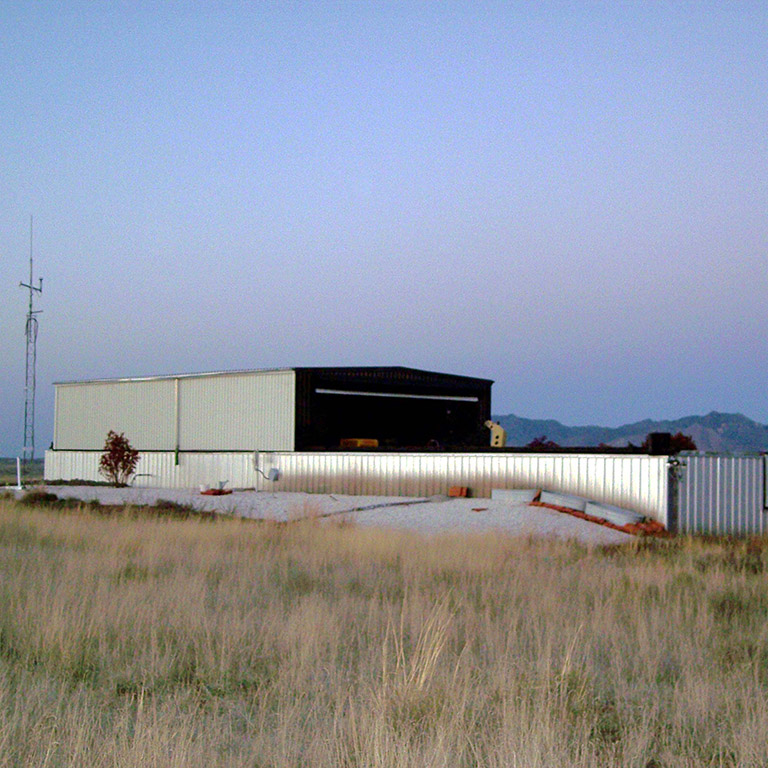
Through the generosity of IU Astronomy alum William J. Delaney, twelve students enrolled in our undergraduate Modern Observational Techniques course during the Fall 2025 semester were able to participate on an observing trip to the Macalester-Augustana-Coe Research Observatory (MACRO) at the Winer Observatory in Sonoita, AZ.
The planets in our Solar System show a strong alignment between their orbital axes and the Sun’s rotation axis (stellar obliquity, ψ). Exoplanets, however, do not always follow this pattern. Three decades of observations reveal that many exoplanets can be significantly misaligned, including those on nearly polar or even retrograde orbits.
Students, postdoctoral researchers, and alum from the Astronomy Department traveled to Madison, WI to participate in the 2025 Great Lakes Exoplanet Area Meeting (GLEAM), which took place November 6 & 7.

On October 31, 2025, Ethan Vishniac, Frank Timmes (Editor in Chief and Associate Editor in Chief of AAS Journals), and Manolis Georgoulis (a Scientific Editor for AAS Journals) visited IU Astronomy to host an AAS Peer Review Workshop.

IU Astronomy PhD student Tatiana Sandford participated in the Galaxy Memoirs conference, which took place in Armação dos Búzios, Brazil, in August 2025. The conference centered around the topic of galaxy evolution and was organized to honor the careers of two prominent astrophysicists who work in this area, Prof. Michael Merrifield and Prof. Alfonso Aragón-Salamanca.

Undergraduate student Bradley Hutchinson has received a scholarship from the Universities Space Research Association (USRA).

On Wednesday, September 17, IU Astronomy and Physics graduate students held the Fall 2025 Python Crash Course. As the first PyIU event of the academic year, this workshop was designed for beginners to both Python and astrophysics

Answering Astronomy Magazine’s “Ask Astro”IU graduate student Jessica Ranshaw responded to Astronomy Magazine’s “Ask Astro” question in the August 2025 issue: “Why are there so many different types of stars?”

From July 20-26, Astronomy graduate students Brandon Radzom and Jessica Ranshaw participated in the 2025 Carl Sagan Summer Workshop held at Caltech's campus in Pasadena, CA.

IU Astronomy was well represented at the 246th meeting of the American Astronomers in Anchorage, Alaska, June 8-12, 2025.

From July 7-11, undergraduate Astronomy & Astrophysics major Bradley Hutchinson attended the AstroAI Workshop at the Harvard – Smithsonian Center for Astrophysics. The Workshop focused on the application of Artificial Intelligence (AI) and Machine Learning (ML) in astrophysics. He learned about applications in many areas of study, including stars, galaxies, and exoplanets. In addition, he made new connections with researchers in the field, gained insights that will help him improve his future work, and gave a poster presentation.

Congratulations to undergraduate Astronomy & Astrophysics major Bradley Hutchinson, who has been selected to receive a Drs. Sidney and Becca Fleischer Research Scholarship supporting his summer research with faculty member Caty Pilachowski.

Astronomy PhD candidate Brandon Radzom was recently awarded the College of Arts and Sciences Dissertation Research Fellowship for the 2025-2026 academic year. This award provides graduate students who have achieved PhD candidacy with a $24,000 10-month stipend that allows them to fully focus on their dissertation research and writing.

A paper led by IU Astronomy Post-Baccalaureate Researcher Jace Rusznak describing the orbital alignment trends of the most massive known exoplanets has been accepted to the Astrophysical Journal Letters for publication. The paper investigates a massive planet 13 times the mass of Jupiter, XO-3b. This target is the first known planet to have an orbit misaligned with the rotational axis of its host star, and has been the subject of controversy over the past 17 years due to disagreements in the measured level of misalignment.

On Wednesday, April 16, organizers for PyIU wrapped up their final event of the Spring 2025 semester with their Advanced Python Workshop. Python is the most widely used programming language in the physical sciences and has become an indispensable tool in astronomy.

Last week from March 31-April 2, Astronomy graduate student Brandon Radzom participated in the American Astronomical Society's (AAS) Congressional Visits Day program. Brandon traveled out to Washington, D.C. with nearly 20 other peers in astronomy across the country to advocate for science on Capitol Hill.

Congratulations to undergraduate student Owen Leonard, who is receiving a Goldwater Scholarship for 2025-26! Owen is a junior studying both astronomy and physics and will work with Prof. Raymond Co in physics to study axions, subatomic particles as dark matter candidate.

March 13, some of the PyIU Organizing Committee members participated in the Spring 2025 Statewide Engagement Institute hosted on campus by the Center for Rural Engagement (CRE). This full-day conference focused on community engagement and interdisciplinary work, student opportunities, and service to the state, and it featured keynote speakers, a panel, a poster session, team collaboration, and interactive brainstorming sessions.

A paper by IU Astronomy graduate student Armaan Goyal, titled “Statistical Reevaluation of the Ultra-Short-Period Planet Classification Boundary”, has recently been accepted for publication in the Astronomical Journal!

Ask Astro is a favorite column in Astronomy Magazine. Readers submit questions, and the magazine finds astronomers with the answers. In the February issue, our own Emeritus Professor Richard Durisen and NASA Scientist Paul Estrada answered the question, “Do Saturn’s rings cast shadows?”

A paper co-authored by IU Astronomy graduate student Brandon Radzom describing a novel NASA mission concept - THUNDER, an orbiter at Saturn's moon, Titan - has just been published to the Planetary Science Journal.

From February 3–7, the Know Thy Star, Know Thy Planet 2 conference was held in Pasadena, focusing on how stars influence exoplanet discovery and characterization. Attendees from the department included Professor Songhu Wang and Postdoc Xian-Yu Wang.

January is the traditional time of the largest gathering of American astronomers, and IU was well represented this year at the American Astronomical Society’s Winter Meeting in National Harbor, MD. Current members of the department attending included Professor Samir Salim, Postdoc Xian-Yu Wang, and graduate students Lexi Gault, Armaan Goyal, Laurin Gray, Brooke Kimsey-Miller, and Ethan White.

Many of our friends and colleagues have enjoyed Hal Kibbey’s Star Trak column on our website. Star Trak has been deeply appreciated by the community, our students, and the Astronomy department – always our go-to source of what to expect in the sky in the coming month!

Sullivan post-doctoral fellow Caleb Choban shared his research on dust in the early universe at the Evolution of Dust and Gas through Cosmic Time conference in Hiroshima earlier in December. Caleb highlighted how reliable dust evolution models are needed to interpret ALMA and future JWST observations of dusty, star-forming galaxies (DSFGs) in the early universe at z<5. Caleb described a suite of cosmological zoom-in simulations of moderately massive, high-redshift galaxies that incorporate a dust evolution model he developed. His model accounts for the dominant sources of dust production, growth, and destruction and follows the evolution of specific dust species, allowing the model to replicate a wide range of present-day observations.

IU astronomy Ph.D. student Laurin Gray and IU Professor Katherine Rhode, along with their collaborators, have recently published a study of rotation velocities in young, low-mass stars in the open star cluster NGC 2264. These stars will one day grow up to be similar to our own Sun, but right now they're only 3 million years old- practically newborns by stellar timescales! By studying stars in the early stages of their evolution, we can learn more about the processes that helped form our Solar System billions of years ago.

IU undergraduate Robbie Mailliard, who spent the summer at the NASA Marshall Space Flight Center and the University of Alabama at Huntsville as an REU student, attended this fall’s meeting of the American Geophysical Union in Washington, D. C., to present his research on the Sun. The AGU draws some 25,000 geophysicists from more than 100 countries.

IU astronomy graduate student Brooke Kimsey-Miller, along with IU alumna Dr. Samantha Brunker and IU Provost Professor. John Salzer, have just published a study of the environments around Green Pea galaxies discovered by the H-alpha Dot Survey.

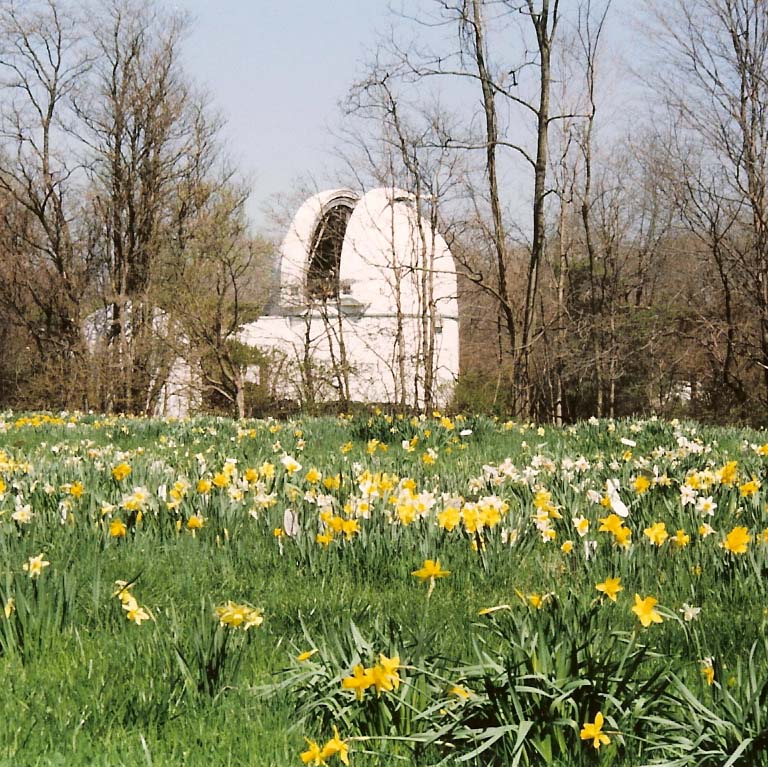
The Ghost of Daniel Kirkwood made a surprise visit to Kirkwood Observatory on Wednesday evening, Oct. 30, to the delight of staff and visitors alike. In celebration of Halloween, the observatory was decorated for the season with the traditional cobwebs, spiders, bats, and pumpkins, and ghouls, goblins, and witches welcomed visitors.

On October 22 from 5:30-6:45 pm, IU Astronomy graduate students and postdocs held our Fall 2024 Advanced Python Workshop. The workshop was a great success, attracting IU undergraduate and graduate students alike from many disciplines including astronomy, physics, biology, chemistry, computer science, and even economics.

IU Astronomy faculty and students hosted our first ever Latine Heritage Celebration on Thursday, Oct. 10, with astronomy lectures in Spanish and a bilingual tour of Kirkwood Observatory.

Visiting Assistant Professor Zachary Maas recently shared his thoughts on being an early career faculty member withPhysics Today.

The orbital planes of the planets in our Solar System are aligned with the Sun’s equator within six degrees. However, for exoplanets, this alignment is not always the case. In particular, hot Jupiters—exoplanets with a normalized semi-major axis (a/R*) less than 11 and masses greater than 0.3 Jupiter masses—can have a wide range of angles between their orbital axes and the stellar spin axes (hereafter, spin-orbit angle).

Professor Chris Mihos, Case Western Reserve University will be presenting this year’s Edmondson Lecture titled: “The Future of the Cosmos”

Last Thursday, September 26, IU Astronomy graduate students kicked off their third year of Python events with the Python Crash Course. The event provided a functional and applied introduction to Python designed for novice or new users of the programming language. Attendees first learned about programming basics as well as the benefits and drawbacks of Python and why it has become so popular across STEM disciplines today.

The Fall 2024 Advanced Python Workshop, hosted by IU Astronomy/STEM graduate students, will be held on October 22 from 5:30-6:45 pm in Swain West room 208.

Announcing the 3rd Annual Python Crash Course presented by the Graduate Students of Astronomy!Interested in getting involved in research? Want to learn Python or just gain general programming skills? Look no further, as graduate students from IU's Astronomy Department will be hosting our 3rd annual Python Crash Course on Thursday, September 26 from 5:30-6:45 pm in Swain West 208. During this crash course, we will teach you the fundamental components of Python as we walk you through a real-world problem in astrophysics. Also, free pizza will be available, so come hungry!

In late July, Xian-Yu, Emma, and Brandon Radzom participated in the TESS Science Conference III (https://tsc.mit.edu/) at MIT's campus in Cambridge, MA. All three presented on the same projects they shared at the ERES IX conference in early July, including more recent progress.

Graduate student Lexi Gault has been awarded the 2024-2025 Media Fellowship of the American Astronomical Society.

IU Astronomy and Astrophysics major Isaac da Silva just returned from the 2024 Student Leadership Conference in Washington DC. The conference is sponsored by the National Society of Black Physicists, the National Society of Hispanic Physicists, the Heising-Simons Foundation, and NASA.

Stellar obliquity, i.e., the angle between the spin direction of a star and the orbital direction of its planet(s), may provide important clues about a planetary system's formation and evolutionary history. Despite decades of effort, the mechanisms by which this spin-orbit angle can become misaligned remain elusive. Particularly, it is of great interest whether the large spin-orbit misalignments observed are driven primarily by the same violent dynamical interactions between planets that are thought to produce isolated giant planets orbiting close to their host stars, or reflect a more universal process.

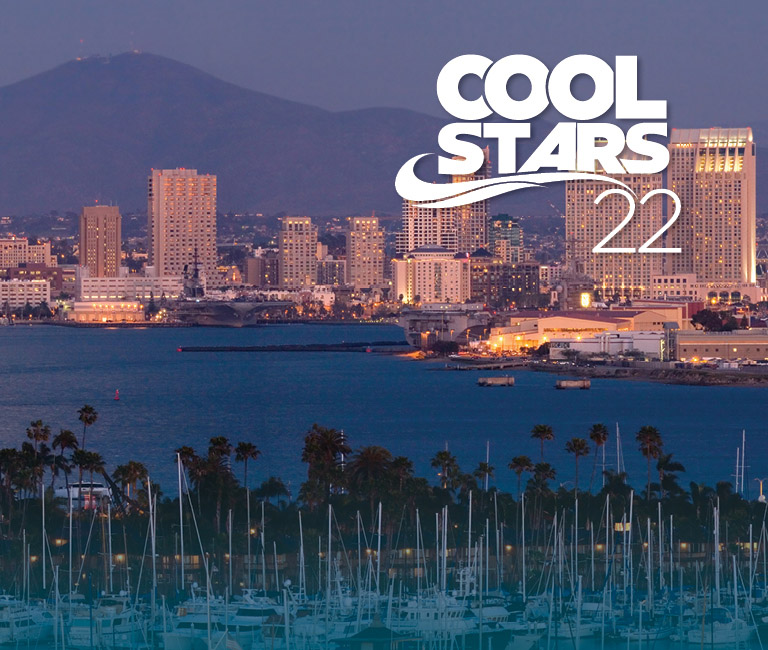
Indiana University faculty and graduate students presented their work at the 22nd Cambridge Workshop on Cool Stars, Stellar Systems, and the Sun in San Diego in June. “Cool Stars,” held every two years, has become the premier conference series for cool star research.

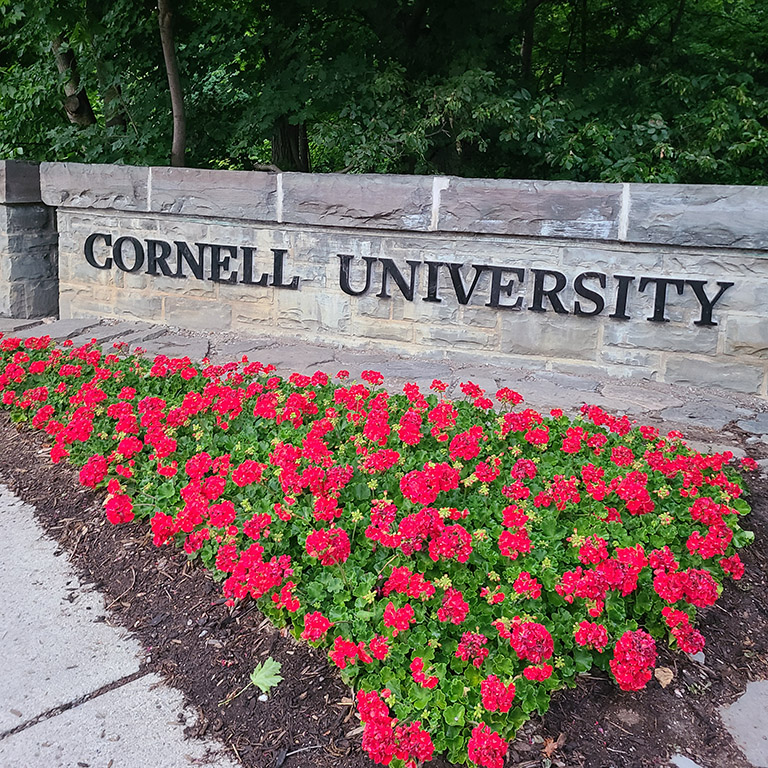
Postdoctoal associate Xian-Yu Wang and graduate students Armaan Goyal, Brandon Radzom, and Emma Dugan all attended the Emerging Researchers in Exoplanets Conference IX (ERES IX) at Cornell University, July 10-12, and presented their research.

Congratulations to Dr. Kristin Brady, who successfully completed the defense of her Ph.D. dissertation in early June. Kristin’s dissertation involves three major project using infrared spectroscopy on problems in stellar astrophysics.

A paper by graduate student Armaan Goyal, titled “Peas-in-a-Pod across the Radius Valley”, has recently been accepted for publication in the Astrophysical Journal Letters!

The second annual Alice Palma Summer Research Program for undergraduates began in May, thanks to the generosity of the Palma Family. This 10-week program supports undergraduate students over the summer to carry out research projects with faculty and graduate student mentors. This summer six students are participating, working on research projects from exoplanets to distant galaxies.

First, we congratulate our graduates this academic year: Talha Ahmed, Arnob Rasul (December, 2023), Jace Rusznak, and Heather Samonski. We’re proud of your success and look forward to all that you will accomplish.

Congratulations to our 2024 Indiana Space Grant Consortium fellowship awardees, Jessica Ranshaw, Brooke Kimsey-Miller, and Lexi Gault.

IU Astronomy student Izzy Flores is receiving the 2024 Distinguished Undergraduate Student award from the Latino Faculty and Staff Council.

Please join us for our annual F. K. Edmondson Astronomy Public Lecture on Thursday April 18th 6:00 PM Rawles Hall Room 100. Dr. Konstantin Batygin from the California Institute of Technology will be presenting this years lecture: "The Hunt for Planet 9"

Dust is an important constituent of the interstellar medium, representing the building block of planets and affecting the light of stellar populations. Dust grains are born in asymptotic giant branch stars and supernova ejecta, but they can also be destroyed by supernova shocks.

Each year, the Department of Astronomy participates in the College’s Science Fest event, offering hands on activities, tours of Kirkwood Observatory, and a glimpse of the universe beyond Earth. Science Fest brings thousands of kids and families to campus to enjoy a day of science.

We are looking at other galaxies through the dust from the disk of our own galaxy, diminishing it and making it look redder. This dust extinction is easily noticed when looking towards the plane of the galaxy, but a smaller effect exists even when looking towards the high Galactic latitudes.

The spectral energy distribution (SED) modeling and fitting is the principal technique for the determination of fundamental galaxy parameters, such as its stellar mass and star formation rate (SFR).However, the accuracy of the derived parameters is sensitive to the models being used and the assumed Bayesian priors.

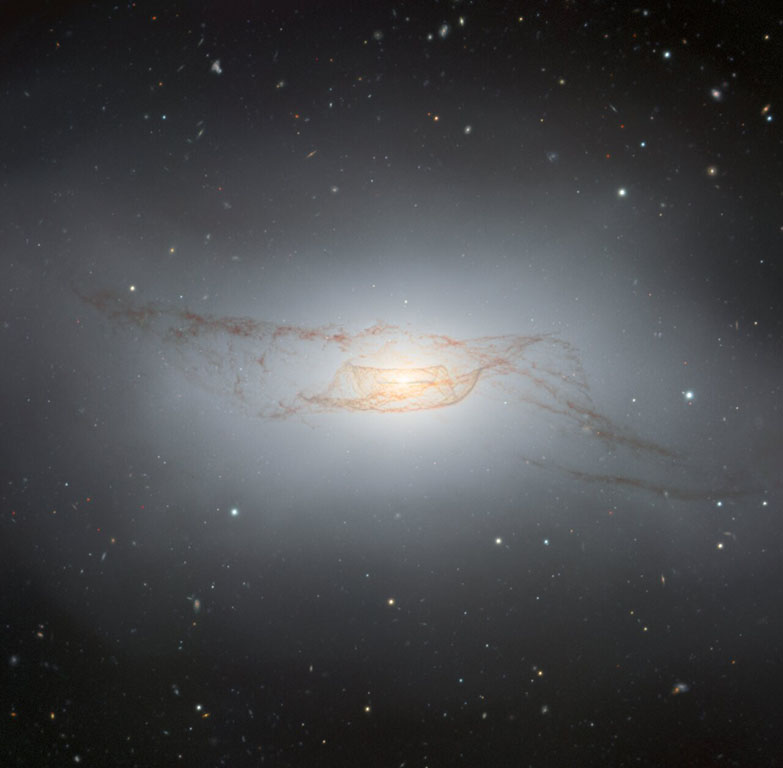
The NOIRLab’s Gemini Observatory recently released a new image of the galaxy NGC4753 observed with the Gemini South Telescope. The galaxy’s twisty dust lanes were the topic of a paper (link to https://ui.adsabs.harvard.edu/abs/1992AJ....104.1339S/abstract ) in 1992 by IU astronomers Tom Steiman-Cameron and Richard Durisen, along with collaborator John Kormendy.

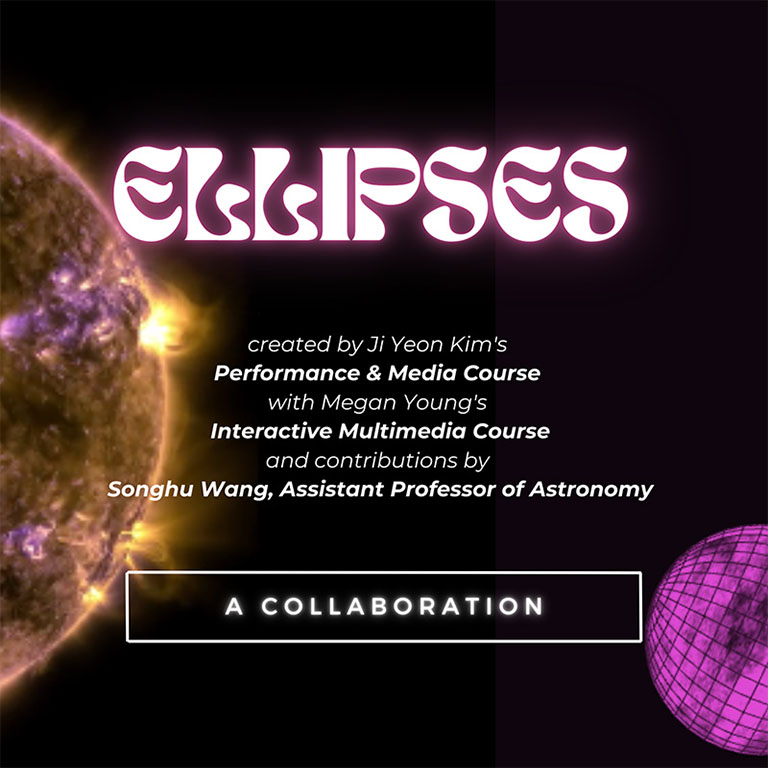
In an engaging showcase of interdisciplinary collaboration, Professor Songhu Wang from the Astronomy Department, Megan Young, Lecturer and Digital Art Area Head at the Eskenazi School of Art, Architecture + Design, and Ji Yeon Kim, Associate Professor of Music in Guitar at the Jacobs School of Music, have merged their expertise to create a distinctive experience that blends music, digital art, and astrophysics.

Graduate Student Kristin Brady has been awarded time on NASA’s Infra-Red Telescope Facility (IRTF) in support of her research. The IRTF is a 3.2-meter telescope on Mauna Kea dedicated to observations of the Universe in infrared light.

A paper by graduate student Armaan Goyal, titled “Enhanced Size Uniformity for Near-Resonant Planets”, has recently been accepted for publication in the Astrophysical Journal!

Graduate students Anika Goel, Robert Howard, Brooke Kimsey-Miller, Dan Ornelas, Sarah Popp, and Tash Sandford, along with postdoctoral associate Xian-Yu Wang are attending the 243rd meeting of the American Astronomical Society in New Orleans this month.

Research Scientist Tom Steiman-Cameron reports the publication of his latest paper on protoplanetary disks in the Astrophysical Journal. Its six authors span three generations of IU faculty and students.

Congratulations to Jongsuk Hong for receiving the Young Astronomer Award by the Korean Astronomical Society for his outstanding contributions to the advancement of astronomy in South Korea.

Exoplanets with high masses that orbit close to their host star are some of the most readily observed planets, but there's still a lot of uncertainty as to how they form. These planets are known as hot and warm Jupiters, depending on exactly how close they are to their host star. In order to determine how they came to be, it's important to learn as many details about their systems as possible.

Congratulations to undergraduate Astronomy and Astrophysics major Jace Rusznak on his election to the Phi Beta Kappa honorary society. Students elected to Phi Beta Kappa meet rigorous standards for academic excellence, ranking in the top 10% of their academic class. Well done, Jace!

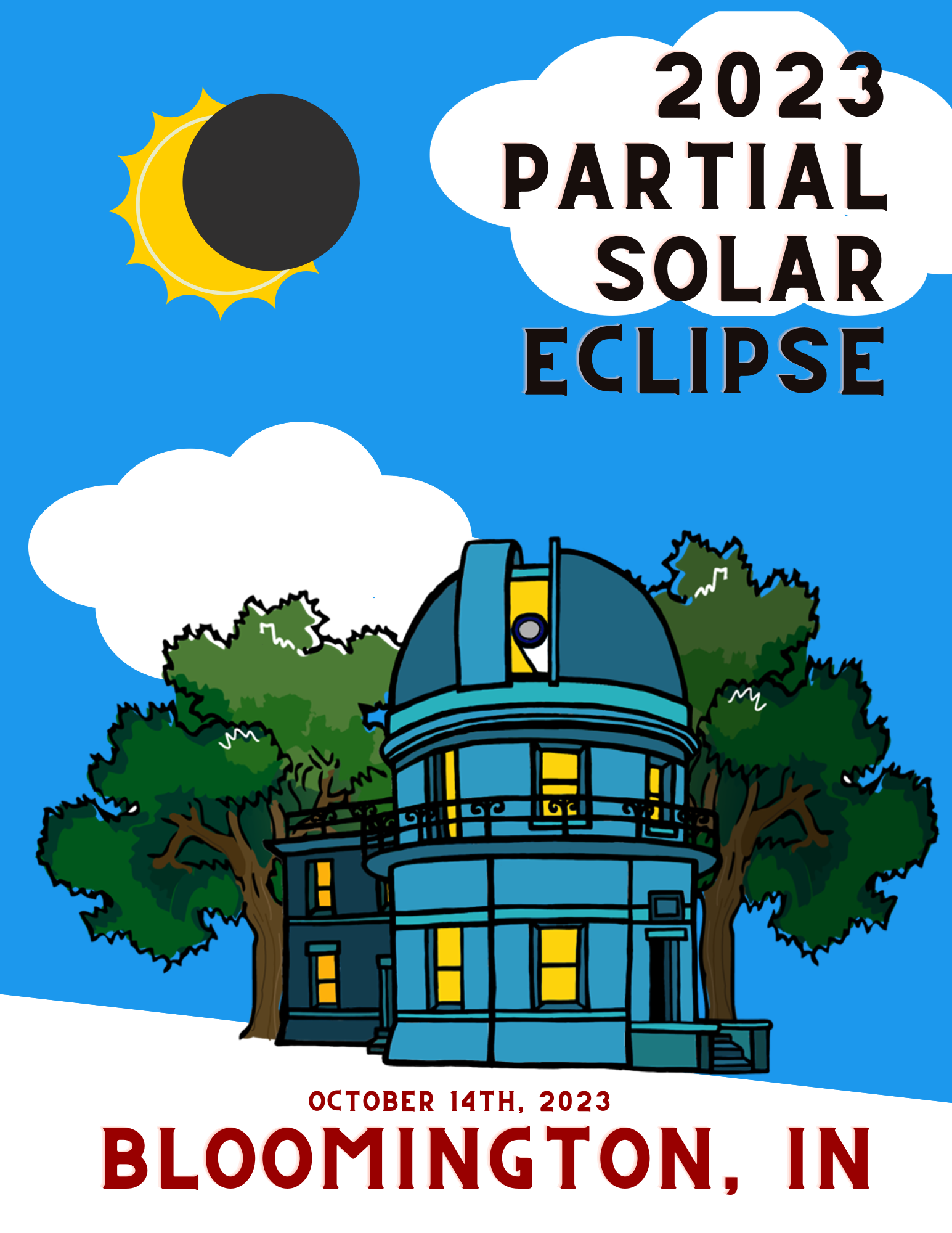
Despite clouds and even a little rain, the Eclipse Watch for the partial eclipse on Saturday, Oct. 14, was a big success. A constant stream of visitors came to learn about the eclipse, tour the Observatory, and take part in activities. Even the clouds parted briefly to let the Sun through, so visitors got a quick glimpse of the eclipse itself. All of our graduate and undergraduate student volunteers were well prepared, enthusiastic, and welcoming.

The Department of Astronomy welcomes Dr. Caleb Choban, our inaugural Sullivan Prize Postdoctoral Fellow. Caleb comes to us from the University of California at San Diego, where he earned his Ph.D. in Physics studying the life cycle and evolution of interstellar dust within galaxies and its effects on and interactions with the interstellar medium.

Graduate student Kristin Brady’s research on the chemical composition of unusual stars in the old open stat cluster Messier 67 has been published in the Astronomical Journal. Congratulations, Kristin!

Recent graduate Chandler Osborne along with Professor Samir Salim, have been awarded a Hubble Space Telescope Archival Grant to produce an HST/SDSS Atlas and Morphological Catalog of 7000 SDSS galaxies serendipitously imaged by HST and study a subset of 2000 galaxies at z<0.3 to elucidate the morphological transformation associated with star formation quenching.

IU Astronomy graduate student Laura Congreve Hunter passes her dissertation defense and completes all degree requirements for her PhD.

IU Astronomy graduate student Chandler Osborne passes his dissertation defense and completes all degree requirements for his PhD.

IU Astronomy graduate student Brandon Radzom participated in the 2023 NASA Planetary Science Summer School, a 3-month summer program for doctoral students, post-docs, and early faculty who are interested in science-driven robotic space exploration.

Recent PhD graduate Laura Congreve Hunter, Prof. Liese van Zee and collaborators (Prof Kristen B.W. Mc Quinn and Dr. Roger Cohn of Rutgers University) have been awarded 6 orbits of time with the Huble Space Telescope to observe nearby, low-mass, star forming galaxies in Cycle 31.

IU Astronomy graduate student Bobby Butler passes his dissertation defense and completes all degree requirements for his PhD.

IU Astronomy graduate student Alex Livernois passes his dissertation defense and completes all degree requirements for his PhD.

IU Astronomy / Physics graduate student Brendan Reed passes his dissertation defense and completes all degree requirements for his PhD.

IU Undergrad Isaac da Silva has just been awarded a TEAM-UP Together Scholarship by the Society of Physics Students, an organization of the American Institute of Physics. TEAM-UP partners include the American Astronomical Society and are sponsored by the Simons Foundation. Scholarships recognize students’ potential, intention, and commitment to continued academic development toward a bachelor’s degree in astronomy or physics. TEAM-UP’s goal is to double the number of Black bachelor’s degree earners in physics and astronomy by 2030.

IU astronomy faculty and students were well represented at this summer’s AAS meeting in Albuquerque.

Graduate students Armaan Goyal and Jessica Ranshaw, along with postdoctoral researcher Xian-Yu Wang from the IU Astronomy Department, were among the active participants at this year's Emerging Researchers in Exoplanet Science (ERES) conference.

Dr. Xian-Yu Wang has been honored as an Outstanding Graduate Student by the National Astronomical Observatory of China (NAOC) and Beijing Municipal Commission of Education.

Assistant Professor Songhu Wang's research is highlighted in an IU News Article.

Saturn’s rings are much younger than scientists once thought, according to new research from Indiana University Professor Emeritus of Astronomy Richard Durisen — and they are not here to stay.

This summer the Astronomy Department has inaugurated a new undergraduate research program, thanks to a generous gift from Russ and Marcia Palma. The Alice Palma Undergraduate Research Program is hosting five IU undergraduate students for the summer.

IU students, postdocs, and faculty were well represented at the annual meeting of the Division of Dynamical Astronomy (DDA) at Michigan State University during the week of May 8, 2023.

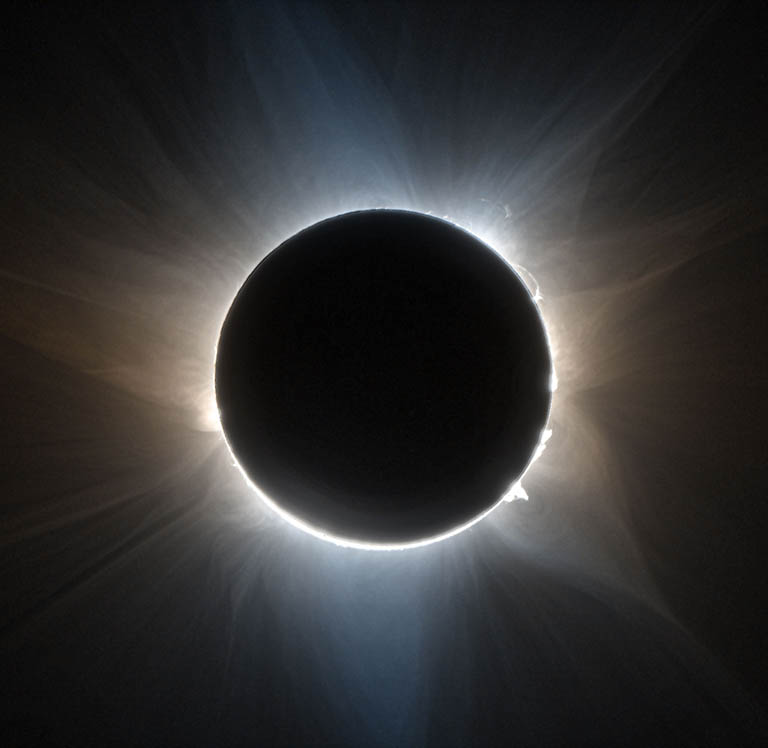
Congratulations to IU Astronomy major Rachael Weir and IU Physics Professor John Carini their successful observation of the April, 2023, total eclipse of the Sun in Exmouth, Australia.

IU Astronomy graduate students hosted a "Python for Astronomers" Crash Course on February 8 for undergraduates interested in astronomy or adjacent sciences.

NASA’s ExoExplorers program focuses on the professional development of graduate student and postdoc researchers at US and international[1] institutions.

A number of our students are headed to this years Astronomical Society Meeting being held in Seattle Washington January 8-12 and we got word that one of our students has already made news headlines.

IU Astronomy graduate student Chris Macias passes his dissertation defense and complete all degree requirements for his PhD.